Fascia, Consciousness, and Emotional Trauma: Exploring the Mind-Body Connection

Updated: May 15
Introduction
You’ll often hear bodyworkers say “everything is connected,” but the extent to which everything is connected is unimaginable. We learn about the body in systems: musculoskeletal, lymphatic, endocrine, reproductive, nervous, respiratory, integumentary, digestive, urinary, and cardiovascular. This makes the body easier to study, but can unintentionally disconnect these systems from one another in our understanding, including how our bodies interact with the surrounding environment, our thoughts, our words, and our intentions.
I want to give you a brief introduction to fascia and its connection to trauma and consciousness. Consciousness is a hard word to define clearly, but in this blog, I will be using it as the awareness that permeates everything, including our being, the environment, and everywhere in between.
What is fascia?

Surrounding every organ, muscle, bone, connective tissue, and infusing itself into every cell in the body, fascia is intertwined in all parts of the body. Made primarily of water (70-75%) and collagen, fascia is a dynamic connective tissue that behaves with both fluid and solid-like properties. It is innervated by nerve endings, making it possible that fascial restrictions may be responsible for your pain (Cleveland Clinic, 2026). When healthy, fascia is hydrated, it is pliable, smooth, and slippery, but when it is unhealthy, fascia becomes thick and sticky–drying up and tightening around muscles, causing limited mobility and painful “knots” to develop (Muscle Pain, N.D.). This can be due to factors such as inactivity, repetitive movement and stress, emotional and physical trauma, and dehydration. Fascia contains several specialized cell types, including fibroblasts, myofibroblasts, telocytes, immune cells such as macrophages and mast cells, and specialized cells known as fasciacytes. Fibroblasts are responsible for producing collagen and maintaining the extracellular matrix, myofibroblasts are cells that are capable of contracting (like muscles) and regulate the tension of the fascia, telocytes are responsible for intercellular communication, and macrophages and mast cells exist within fascia to respond to inflammation and injury.
Fascia also has mechanoreceptors (respond to mechanical pressure/distortion) and thermoreceptors (which respond to heat and transmit that information to the nervous system) – cells that reside in the skin that gather information about the outside environment. Massage therapy directly stimulates mechanoreceptors and, to a lesser extent, thermoreceptors, both of which are types of skin and tissue sensory receptors that send signals to the brain to influence perception, pain control, and relaxation.
How trauma lives in the body and fascia
Dr. Robert Schleip, a leading researcher in the field of fascia, suggests that fascia is believed to play a critical role in the storage and manifestation of emotional memories and trauma (Hammer, 2025). This may help explain why some individuals report emotional releases during bodywork, yoga, or acupuncture sessions that involve deep relaxation or fascial release. A 2020 publication by Dr. David Lesondak and colleagues explored the possibility that fascia may play a role in how trauma manifests physically within the body, particularly in chronic pain patterns (Lesondak et al., 2020). The sensory receptors and autonomic nerve endings that were mentioned above are closely linked to the autonomic nervous system (Hammer, 2025). The autonomic nervous system, which regulates involuntary body functions, is divided into the sympathetic (fight or flight) and parasympathetic (rest and digest) systems. Chronic stress and trauma can contribute to increased muscular guarding and fascial tension (think of how you tense up when in a stressed state), it can impair the functioning of these systems, perpetuating a state of chronic stress. A review in the International Journal of Environmental Research and Public Health published in 2021 shows that fascial stiffness and restrictions can make physical symptoms of emotional trauma much worse and lead to more chronic pain and tension (Wilke et al., 2021). This emphasizes how important it is to address both emotional and physical health in trauma recovery (Hammer, 2025).
Connecting consciousness and fascia
A network of extraordinary communication comparable to the operating system of a computer lies within every one of us. The brain is our hard drive, signalling to our bodies to move, organs to function, and operating on its own incredible intelligence. “The fascial system is remarkably responsive, constantly adapting to movement, stress, injury, thoughts, feelings, and the surrounding environment, and possesses an extraordinary capacity for adaptation and self-repair" (Chadbourne, 2016).
In a 2016 article called The Structure That Carries Consciousness in Energy Magazine, Marisa Chadbourne shares this paragraph:
“In her book Molecules of Emotion, Dr. Candace Pert reveals this connection at work through the study of neuropeptides and their receptors. Every cell has its own receptors whose function is to receive messages. Neuropeptides are the messengers telling the cell how to react. While conventional science viewed the release of neuropeptides traveling a direct path solely from the brain to the cell receptor, Dr. Pert and others discovered differently. In fact, the chemical release of neuropeptides happens simultaneously throughout the body in the immune, nervous, endocrine, and gastrointestinal systems, in response to thoughts and feelings. Each of these systems formed what Dr. Pert called ”nodal points on a vast superhighway of internal information exchange taking place on a molecular level” proving that the brain is not the only communicator or the seat of consciousness.(1) Instead, this study shows the body has its own consciousness, which reacts to its environment, thoughts and feelings. Consciousness lies within our entire being. More importantly, the connective tissue is a continuous system that exists throughout the entire body. This living matrix is an intricate web of tough yet flexible fibers, weaving together like vines permeating each and every cell. The cytoskeleton of the cell, also called the cellular matrix, consists of microtubules filled with fluid and surrounded by ground substance. So one could say, each and every cell of the body has its own mini fascial system.(2) A histological view would show a nuclear matrix, within a cellular matrix, within a connective tissue matrix. Dr. Oschman explains, “As a hands-on therapist, what you touch is not merely the skin – you contact a continuous interconnected webwork that extends throughout the body.”(3) This living matrix has been further proven with endoscopic evidence provided by Dr. Jean Claude Guimberteau. His new book Architecture of Human Living Fascia challenges the current medical perception of the fascial system. "This continuous network of fibers appears to extend throughout the body, suggesting that we need to rethink our understanding of the way in which living matter is organized. We can no longer view the body as a collection of cell-based organs held together by connective tissue. Instead, we must now see it as a constitutive fibrillar framework in which the organs are but local functional adaptations. Groups of cells with specific, specialized physiological functions are assembled within a Mult fibrillar network to form the organs. The cells are embedded in and supported by the fibrillar framework. This basic architectural pattern is the same for all the organs, as well as for the skin, fat, muscles, bones, tendons, nerves and vessels.”(4) Therefore, the body is not a system of separate parts, but rather a continuous structure of sophisticated tissue containing connections that coordinate a beautiful symphony of communication” (Chadbourne, 2016)
Now we can take this paragraph and connect it to Dr. Masaru Emoto’s work with Water Experiments. Dr. Masaru Emoto was a Japanese author and researcher known for his work exploring the relationship between human consciousness and water, an internationally renowned Japanese researcher, author, scientist, and businessman known for his New York Times bestseller “The Hidden Messages in Water” (Lund, 2023). While more philosophical than scientifically established, this is where many people begin drawing connections between fascia, emotion, and consciousness. Remember how I mentioned earlier that fascia is 70-75% water and in the above paragraph, it mentions that consciousness inside the body reacts to the surrounding environment, thoughts, and feelings. According to Dr. Masaru Emoto’s controversial theory of water consciousness, water, including the water inside your body, can respond to human emotions, thoughts, words, and even written messages (Lund, 2023). Dr. Emoto’s method was to observe the crystals formed in frozen water with high-speed microscopic photography after exposing them to specific thoughts. “2,000 people in Tokyo were instructed to make positive intentions toward water samples inside an electromagnetically shielded room. Similar water samples were also kept in different locations as a control.” His work suggested that intention and vibration could influence the appearance of frozen water crystals, though these claims have not been validated by mainstream scientific research. For example, when saying words like “hope” or “love and gratitude” the frozen crystals from this water creates a stunning geometric symmetry in crystals. When water was polluted or exposed to negative words or thoughts the crystals were incomplete, dull, and asymmetrical (Lund, 2023).

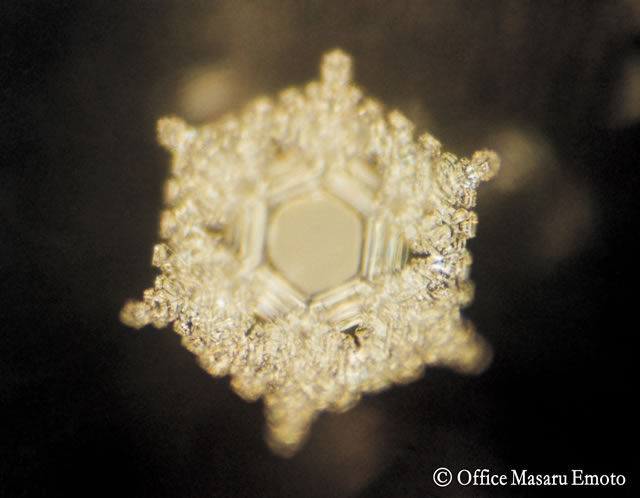

Image above from alivewater.ca shows a water crystal formed with self-consciousness.
I understand these ideas may feel speculative or difficult to accept from a conventional scientific perspective, but I believe this world is a lot more magical than many of us think.
So, connecting this all back, fascia may participate in complex forms of body awareness and communication, and since the body as a whole is majority water, some people interpret this as evidence of a deeper connection between the body, emotion, and environment. This perspective may also help explain why emotional experiences can feel physically embedded within the body. I think some of these connections give a lot more validity to some ideas and practices that may be considered “woo woo.” Although gaining popularity and more modern science behind them, practices like chanting, sound baths, positive affirmations, and meditation have gotten a bad rep in the Western world, but they are potentially working on a vibratory level.
How to use this information on fascia to instruct your own healing
If you’ve made it this far, thanks for staying with me. Now I want to give you information on how to keep your fascia (and your mind) healthy, especially if you have suffered from any kind of trauma. There are multiple ways to release tissue memory in the fascia system: fascial unwinding, yin yoga and other somatic therapies in cooler rooms that emphasize held movement and stretching, and mindfulness and meditation practices.
Fascial unwinding uses gentle touch and guided movement to stimulate mechanoreceptors, allowing the body to naturally release tissue memory that has been stored. This release of memory allows for new neural pathways, potential for support of nervous system regulation, new movement patterns, and emotional processing (Chadbourne, 2016)
Yin yoga and other somatic therapies help maintain the elasticity and health of fascia (Hammer, 2025).
Mindfulness and meditation reduce our overall stress levels, promote relaxation and may positively influence how we experience stress, tension, and emotional regulation within the body (Hammer, 2025)
Final Thoughts
Fascial research is still evolving, and many theories surrounding consciousness, emotional memory, and energetic communication remain exploratory rather than fully established scientific fact. However, what is becoming increasingly clear is that the body is deeply interconnected with itself, the environment, and our thoughts and words.
Pain is rarely just physical. Stress is rarely just mental. And healing often involves far more than treating isolated symptoms.
As massage therapists continue integrating emerging research with compassionate care, fascia offers a fascinating lens through which we can better understand the profound relationship between body, mind, emotion, and human experience.
References
Chadbourne, M. (2016, May). The structure that carries consciousness. Myofascial Release. https://www.myofascialrelease.com/downloads/articles/TheStructureThatCarriesConsciousness.pdf
Hammer, C. (2025, November 10). The impact of fascia on emotional trauma: Unveiling the connection: Yoga therapy & somatic research. Clinical Yoga. https://www.clinicalyogainstitute.com/post/the-impact-of-fascia-on-emotional-trauma-unveiling-the-connection
Lund, M. (2023, December 20). Water experiment by dr. Masaru Emoto. Alive Water. https://www.alivewater.ca/dr-masaru-emoto/
Muscle pain: It may actually be your fascia | Johns Hopkins Medicine. (n.d.). https://www.hopkinsmedicine.org/health/wellness-and-prevention/muscle-pain-it-may-actually-be-your-fascia
professional, C. C. medical. (2026, April 27). Fascia tissue function. Cleveland Clinic. https://my.clevelandclinic.org/health/body/23251-fascia

Comments